Built in the field. Tested through a drought.

CropKern started with a 2,300-acre corn operation, a Sentinel-2 account, and a question nobody had a good answer to in 2021.

Why we built this

In the summer of 2021, Daniel Ferreira was consulting on a 2,300-acre corn operation in central Iowa during one of the driest Julys on record. The grower had a soil moisture sensor network - six nodes across the whole farm - and USDA county-level yield forecasts that were three weeks stale by the time they arrived. Nobody could tell him whether the southwest quarter was going to make 180 bushels or 140.

Daniel had been working with satellite imagery in remote sensing research before moving into agronomy consulting. He knew Sentinel-2 had the temporal resolution and the red-edge band to detect canopy stress weeks before it showed up in the crop. He built a rough pipeline over that winter, ran it on archived data against the 2021 weigh tickets, and found the mean absolute error was 4.3 bu/ac at the parcel level - better than anything available at a field scale.

The problem was that pipeline was a collection of Python scripts, a cron job, and a Google Sheet. It worked for one consultant who understood what he had built. It was useless for anyone else.

CropKern is what happens when you take that pipeline seriously. We spent 18 months making it reproducible, documented, and operable by agronomists who do not want to run Python scripts. The satellite and sensor fusion is the same. The forecast methodology is the same. The interface is not.
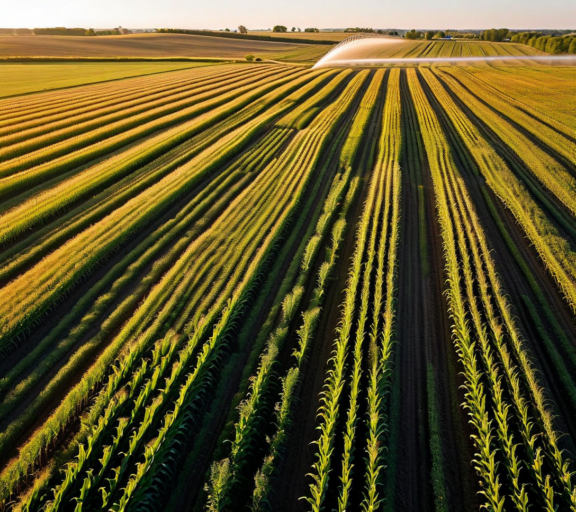
Iowa corn fields aerial view

What guides our decisions

Accuracy is a number, not a claim

We publish per-season, per-crop accuracy reports from real grower data. We do not advertise percentages we have not earned on independent parcels.

Agronomists review every model update

No model ships to production without review from at least one certified crop adviser. We know what satellite bands can and cannot detect. We do not pretend otherwise.

Grower data belongs to growers

Parcel geometries, yield records, and sensor time series are never used in aggregate model training without explicit written consent. You can export everything in standard formats on 30 days' notice.

Hardware-agnostic by design

We do not sell sensors. We built MQTT and Modbus connectors so existing hardware investments work with CropKern on day one. Your sensor vendor choice should not determine your software options.

Explainable recommendations only

Every irrigation schedule links back to the specific sensor readings, ET calculation, and crop coefficient that produced it. Agronomists should be able to dispute a recommendation with evidence, not accept it on faith.

Field-scale resolution matters

County-level yield forecasts are useful for commodity markets. They are not useful for deciding which pivot runs tonight. We optimize for the decision a grower actually has to make.

CropKern in 2025

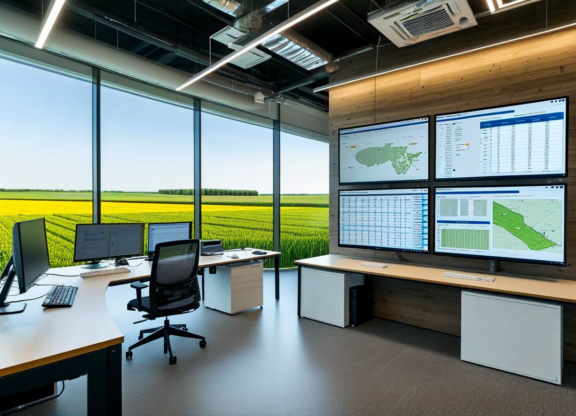
CropKern team working

CropKern raised a Seed Round in January 2025 and is currently running production deployments across farming operations in Iowa, Illinois, Indiana, and Kansas. Our three-person founding team has been joined by two field implementation engineers and a data scientist.

We are headquartered in Des Moines, Iowa - deliberately. The decision-makers we serve are here. The fields we optimize are within two hours of the office. We do site visits, not just video calls.

Meet the team

Growers built this. Growers should use it.

If you manage more than 500 acres and want field-level yield prediction before your next planting decision, we want to talk.

Get in touch